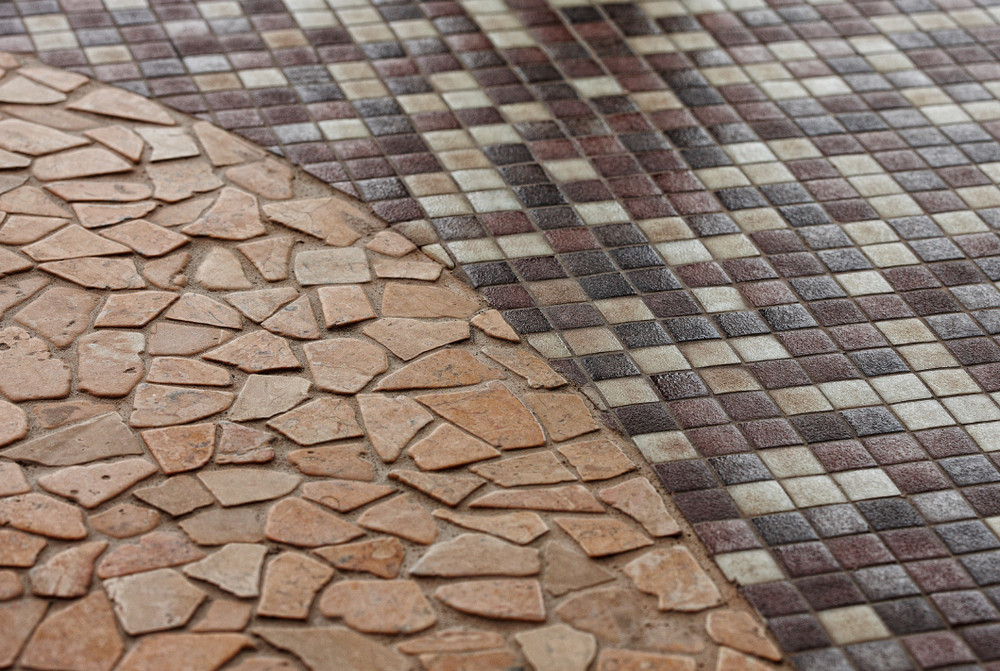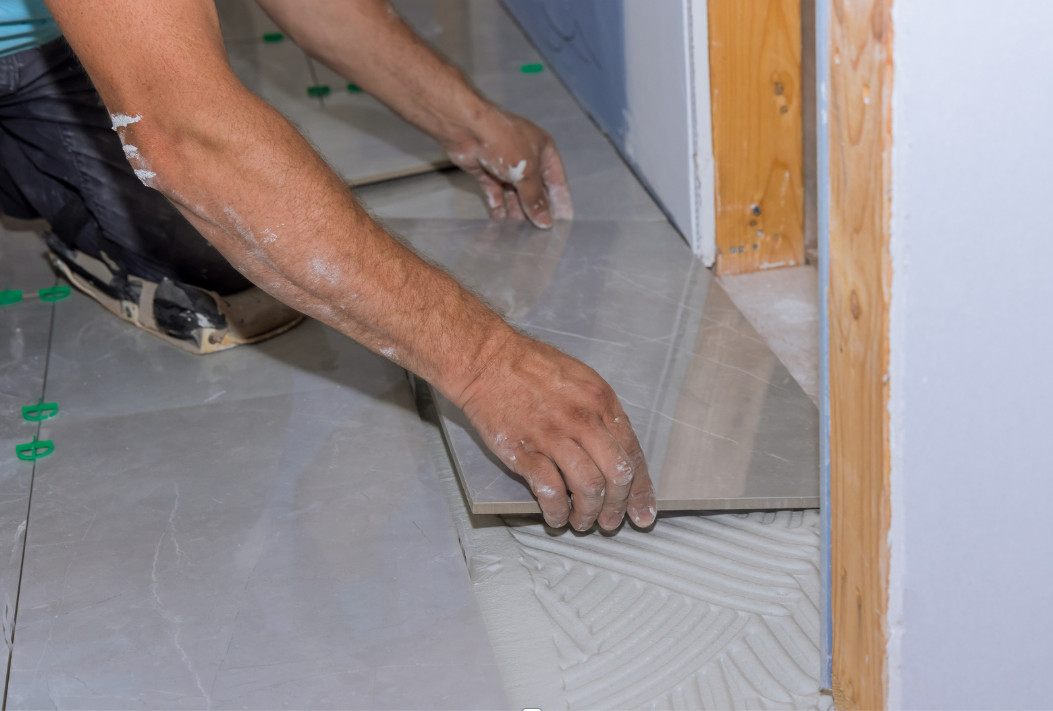


Nationally, a complete tile installation, materials and labor combined, runs roughly $15 to $75 per square foot, depending on the material and how complicated the job is. Labor alone typically falls between $3 and $22 per square foot. There’s no single Palm Coast number here. No independent cost source researched for this article, not even Google’s own AI-generated cost summary, publishes one. Every one of them ends the same way: by asking what room it is, how many square feet, and what tile you’re planning to use, before giving a real number. This article walks through that same breakdown, material by material and service by service, so you can budget realistically. Then request a free estimate for a number that reflects your actual project.
Why We Won’t Give You One Made-Up Palm Coast Number
If you searched for a single “average cost to install tile in Palm Coast” figure, you’ve probably already found one. At least one auto-generated cost-aggregator site quotes an “average” project cost for Palm Coast: no stated methodology, no local project references, no way to check where the number actually came from. This article won’t add another one to the pile.
Why not? Every properly sourced cost guide we reviewed, industry cost-data sites, contractor marketplaces, and Google’s own AI-generated answer for “tile installation cost per square foot,” lands on the same conclusion: a real number depends on the room, the square footage, the tile you pick, and what the substrate underneath looks like. Nobody can quote it honestly without that. Even Google’s AI summary for that exact search closes by asking the reader for those three details instead of giving one flat price. That’s not a dodge. It’s the only accurate way to answer the question.
Palm Coast Tile & Stone works the same way. We’ll walk through every service on our services list with real per-square-foot ranges pulled from independent, current cost data, and tell you plainly which variables move those ranges up or down for a Florida project. What we won’t do is invent a Palm-Coast-specific number nobody has actually verified. If you want a number specific to your project, request a free estimate and we’ll look at the actual space.
The Full Cost Breakdown
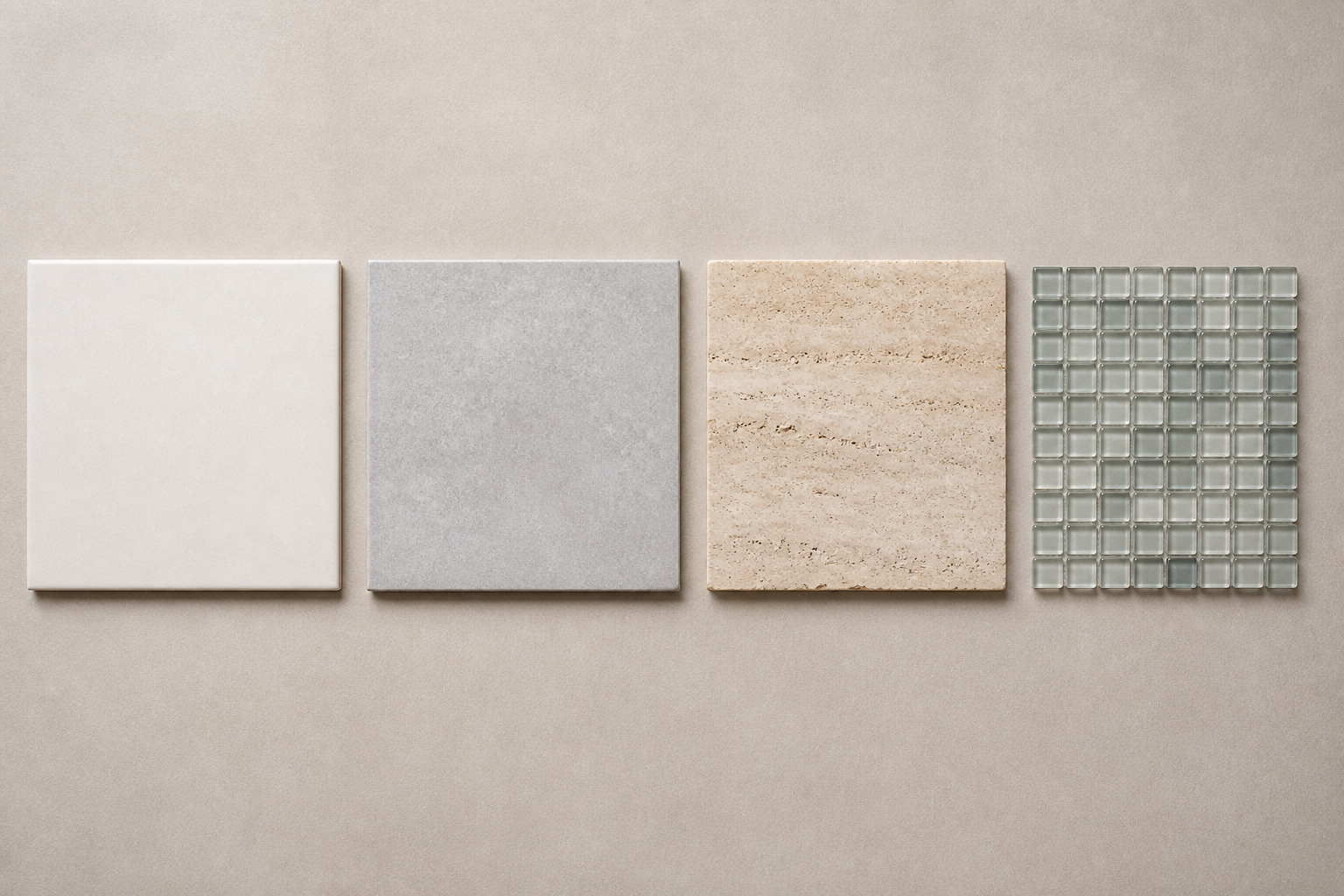
The table below breaks the range down by category, pulled from national cost-data sources and cross-checked against Google’s own current AI-generated cost summary for this exact query.
| Cost element | Range | What it covers |
|---|---|---|
| Total installed cost, complete project | $15 – $75 / sq ft | Materials and labor combined, ceramic through premium natural stone |
| Labor only | $3 – $22 / sq ft | Simple layouts run toward the low end; complex patterns and natural stone run toward the high end |
| Ceramic tile, materials only | $1 – $8 / sq ft | Budget-friendly, lightweight, easy to cut |
| Porcelain tile, materials only | $4 – $14 / sq ft | Denser and more water-resistant than ceramic |
| Natural stone, materials only | $7 – $25+ / sq ft | Marble, slate, travertine; heavier, needs specialized cutting and sealing |
| Glass or mosaic tile, materials only | $10 – $35+ / sq ft | Highest material cost category; more cutting and waste, see below |
| Subfloor prep / waterproofing | +$2 – $5 / sq ft | Backer board, self-leveling underlayment, shower waterproofing |
| Demolition / old flooring removal | +$2 – $7 / sq ft | Tearing out and hauling away existing flooring |
| Typical minimum project fee | $300 – $500 | Applied instead of a per-sq-ft rate on very small jobs |
Look at the glass and mosaic line first. It costs more than every other material category, and not because the glass itself is exotic: small format pieces mean more cutting, more waste, and more time spent on layout, which shows up in both the materials and labor lines.
Now look at the minimum project fee line, because it matters more than it looks. A lot of small jobs, a single hearth, a small closet floor, a handful of loose tiles, get billed against that flat minimum instead of a true per-square-foot rate. The setup and cleanup time doesn’t shrink just because the area does.
What Actually Drives the Price
“Why does tile labor cost so much?” is one of the most common questions people search before ever getting a quote. There’s an actual, specific answer, and it’s more useful than “labor is expensive everywhere.”
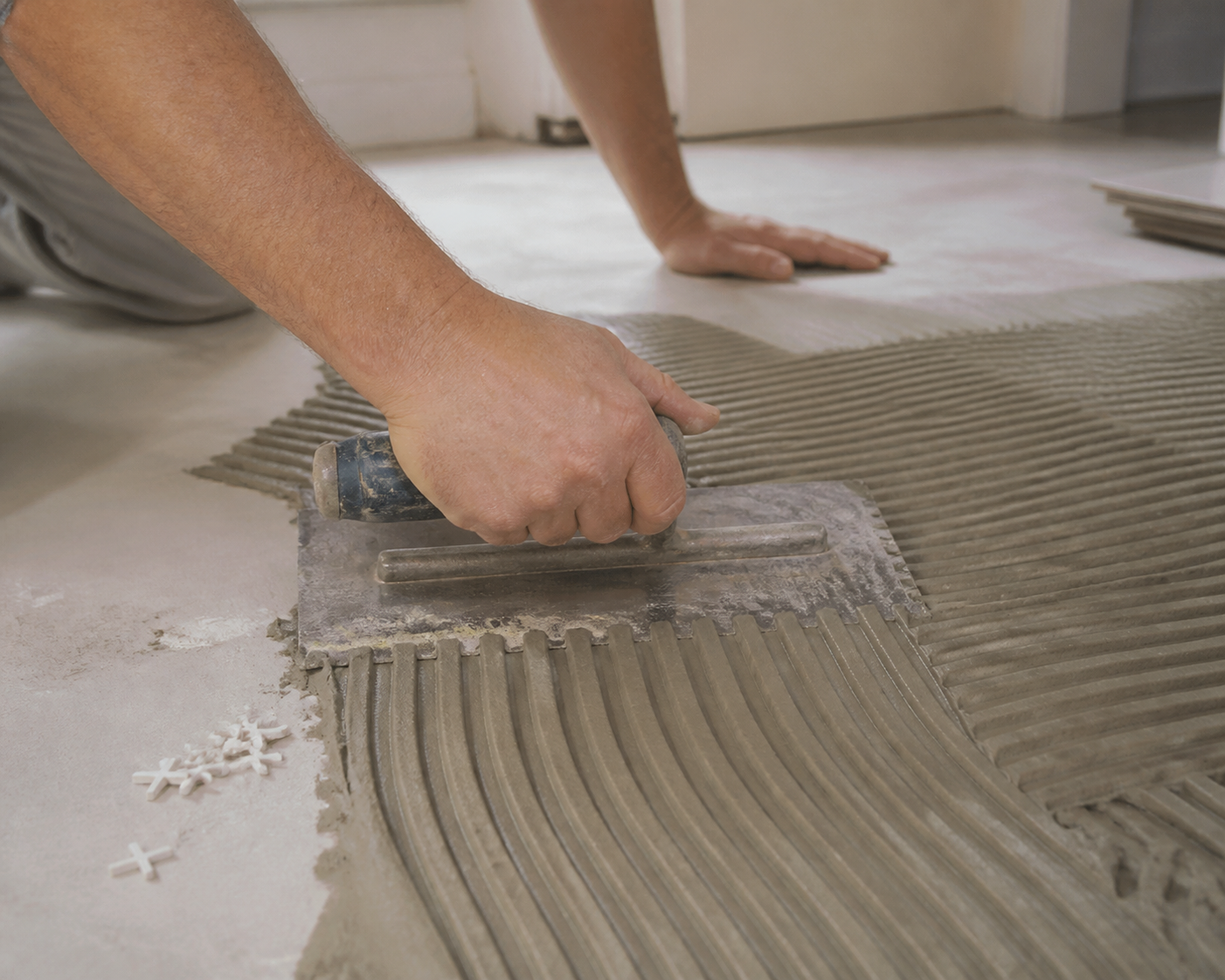
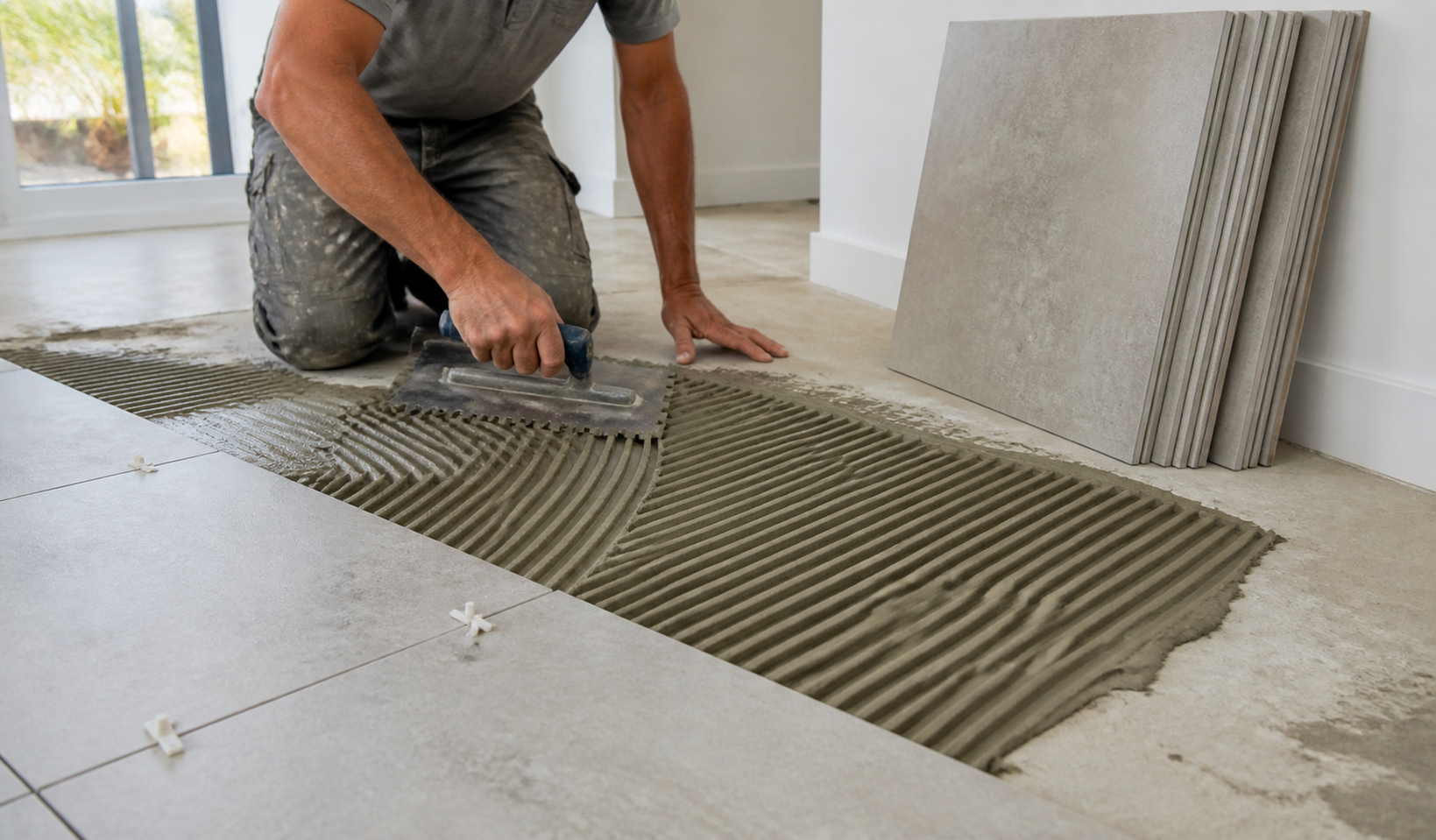
Large-format tile, generally anything with one edge 15 inches or longer, carries a labor premium. That premium isn’t arbitrary. ANSI A108.02, the industry installation standard tile setters work against, requires the substrate under large-format tile to be flat within 1/8 inch over any 10-foot span, roughly twice as strict as the 1/4-inch tolerance allowed for standard-size tile. The standard also calls for a minimum of 95% mortar coverage on the back of large tile and the substrate underneath it, and caps allowable lippage, the height difference between two adjacent tile edges, at just 1/32 inch under section 4.3.7.
What that means in practice: if your existing floor or wall isn’t within that tolerance, and most older floors aren’t, the installer has to spend actual, billable time leveling it before a single large-format tile gets set. Tile that doesn’t sit flat gets wasted too, once it’s lifted and reset to hit the tolerance. That’s the real mechanism behind “large-format tile costs more to install.” Not a markup. Just the substrate work the standard requires.
Florida and Coastal Cost Factors
This is where a generic national cost guide stops being useful. A Florida project genuinely differs.
Standard cementitious grout absorbs 8 to 15 percent of its weight in water. In a humid coastal climate, that absorbed moisture contributes to discoloration and grout breakdown over time. Epoxy grout costs roughly 3 to 4 times more than standard grout, but it resists moisture substantially better. That’s why it’s commonly recommended for wet areas, exterior installations, and pool surrounds in this climate. It’s a legitimate upgrade to ask about, not an upsell.
Natural stone brings its own coastal consideration. In humid, salt-air environments, porous stone is prone to efflorescence, a white mineral bloom that forms when moisture carries dissolved salts up through the stone to the surface. Installers commonly manage this by pre-sealing porous stone before it’s set, sealing it again after grouting, and finishing with a sealer rated for salt-air exposure. Each step is additional labor and material, not a hard-and-fast rule for every project. Each has a cost impact too, even though no source publishes a precise dollar figure for it. We won’t tell you an unsealed coastal installation will fail on a fixed timeline. We can’t verify that, so we won’t claim it. What we can tell you: installers in this climate commonly treat sealing as its own line item, not an afterthought.
Bathroom Tile Installation Cost
Bathroom tile follows the same by-material ranges as the table above, but one line item catches people off guard: waterproofing. A real homeowner quote reviewed while researching this article broke out a shower’s waterproofing membrane as its own separate charge, distinct from the tile-setting labor itself. That’s a common, legitimate way to itemize a bathroom quote. Not a padded add-on. Waterproofing and subfloor prep typically add $2 to $5 per square foot on top of the base tile-and-labor cost, and in a shower or tub surround, it isn’t optional. Our bathroom tile installation page walks through what that prep actually involves.
Kitchen Tile Installation Cost
Kitchen floor tile follows the same by-material ranges from the table above. Ceramic and porcelain are the most common choices, and natural stone shows up in higher-end kitchens. One thing is specific to kitchens: floor tile here is more often large-format, both for the visual effect and to minimize grout lines across a large open floor. That means the substrate-flatness and lippage standard covered above applies directly. Is your kitchen floor out of level? Budget for that prep step, not just the tile itself. See our kitchen tile installation page for more on how we handle that.
Backsplash Installation Cost
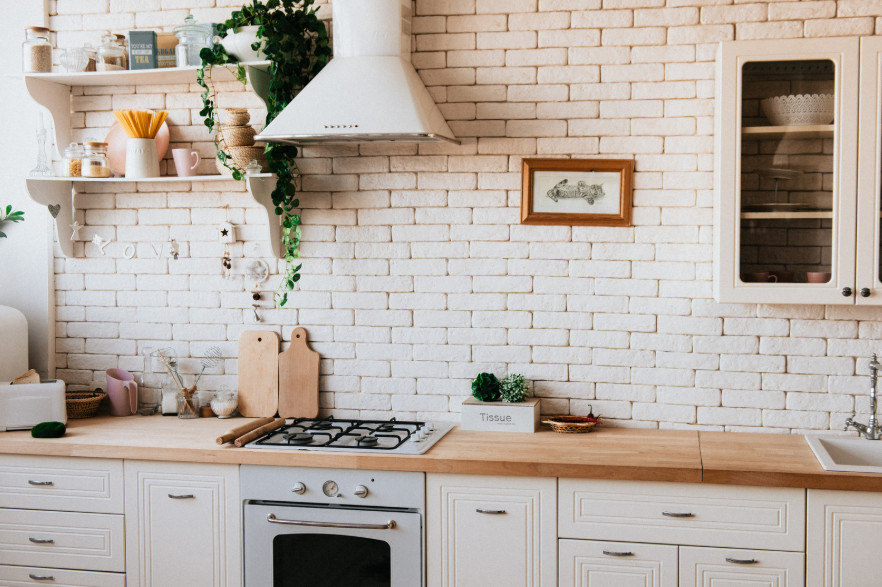
Glass and mosaic tile is the most common backsplash material. It’s also the highest-cost category in the by-material table above, at $10 to $35 or more per square foot for materials alone. That’s not a random premium. Small-format glass and mosaic pieces require more cutting, produce more waste, and take longer to lay out evenly than a single large-format tile covering the same area. A backsplash is a small total area, so material cost per square foot matters more than it would on a full floor. Our backsplash installation page covers layout and material options in more detail.
Outdoor Tile and Porcelain Paver Pool Deck Cost
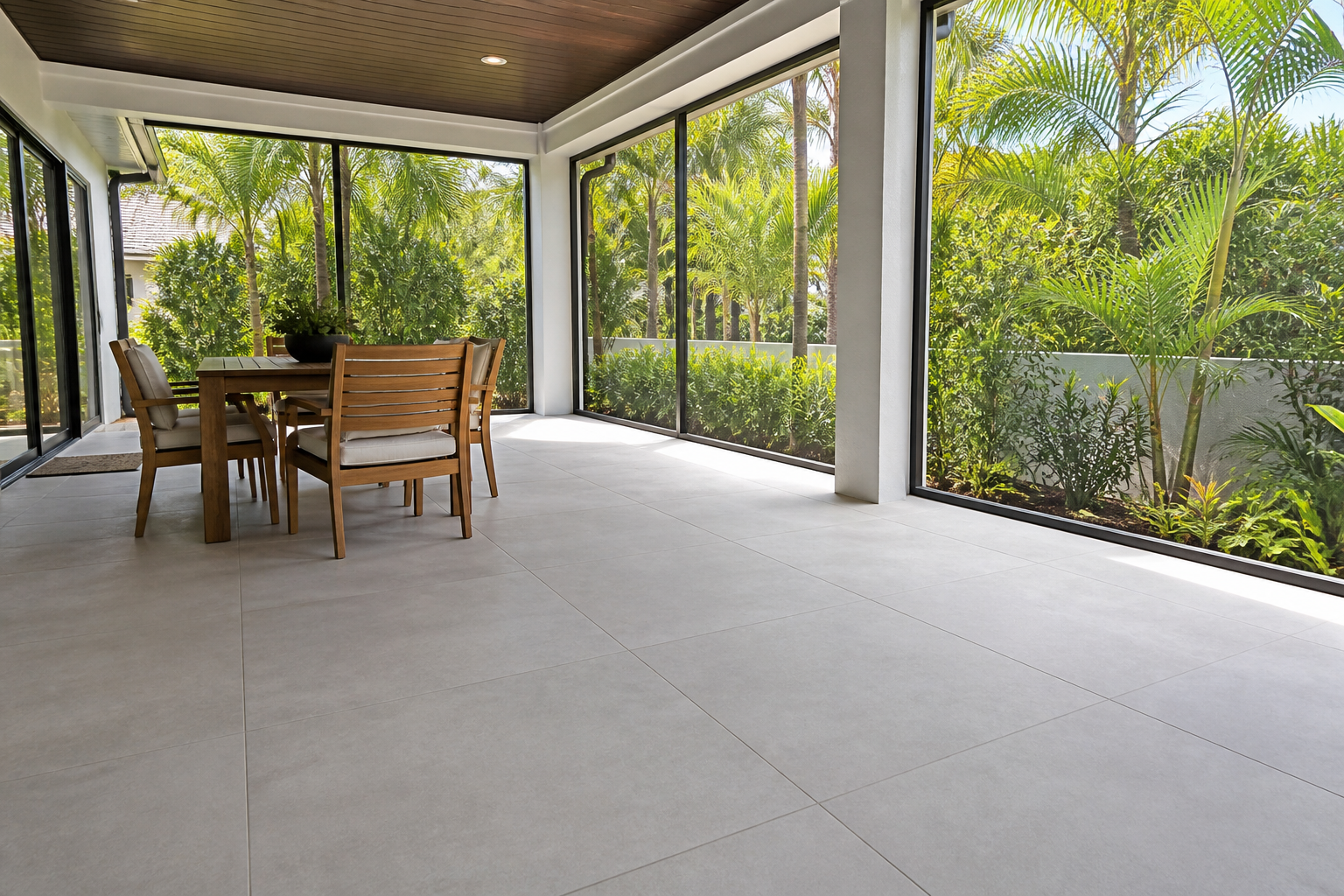
“Pavers” in our outdoor work means 2cm porcelain paver tile, mortar-set or pedestal-set, for pool decks, lanais, and patios. That’s a specific tile product and installation technique. Not traditional dry-laid concrete or clay pavers, which is a separate hardscaping trade we don’t do. Porcelain paver materials alone typically run $6 to $10 per square foot, with labor adding $5 to $10 per square foot depending on whether the job is pedestal-set (elevated on adjustable supports, common for decks over an existing slab) or mortar-set (bonded directly to the surface below).
The closest real Florida comparable we found for a fully installed price comes from a Sarasota paver installer, EC Paver Solutions: installed porcelain pavers there run roughly $22 to $45 per square foot, compared to travertine at $20 to $36 per square foot. That’s a same-state figure, not a Flagler County one, and it isn’t this business’s price. It’s the closest genuine regional data point we found. Our outdoor tile installation page covers pool deck, lanai, and patio work in more detail.
Flooring Installation Cost
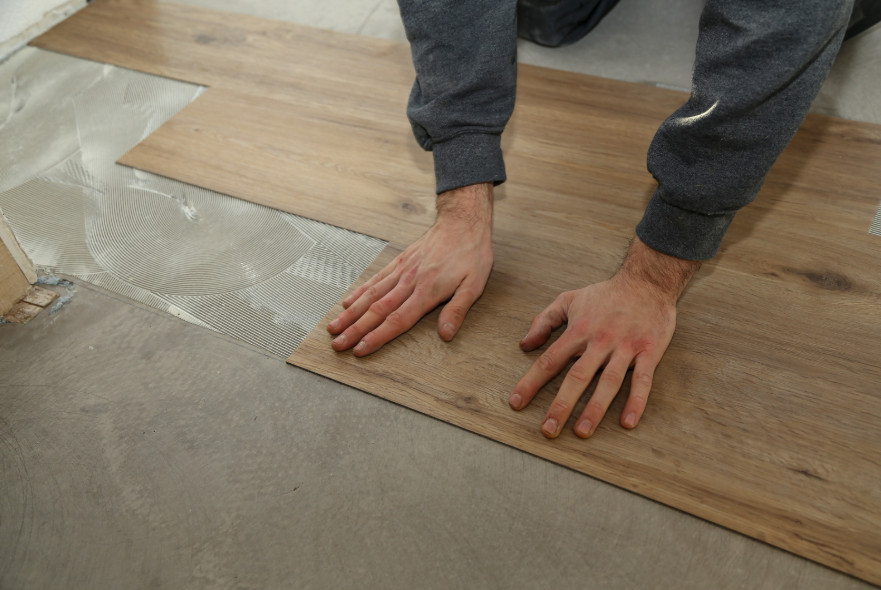
This section is specifically about tile flooring cost, which follows the by-material ranges in the breakdown table above. Palm Coast Tile & Stone’s flooring line also covers natural stone and LVP (luxury vinyl plank) flooring. Those are priced and installed differently from set tile, and they aren’t part of the tile-specific ranges in this article. Our flooring installation page covers the full range of flooring materials and what drives cost across each one.
Custom Fireplace Tile and Stone Cost
Fireplace surrounds usually use the natural stone materials range from the table above, roughly $7 to $25 or more per square foot for materials alone, since marble, travertine, and similar stone are common choices for a fireplace surround. Fireplace projects are typically small in total area but heavy on specialty cuts around a firebox opening, mantel, and hearth edge. That’s part of why small specialty jobs like this often get billed against a minimum project fee rather than a straight per-square-foot rate (more on that below). Our custom fireplace page covers materials and layout considerations specific to fireplace surrounds.
Tile Repair Cost
Small repair jobs, a handful of cracked tiles, a section that’s come loose, don’t usually get priced per square foot the way a full installation does. Across the cost sources reviewed for this article, small trade repair jobs commonly get billed against a $300 to $500 typical minimum project fee. That’s the same convention that applies to any small job requiring a service call and setup time, regardless of how small the actual repaired area is. It’s a general industry convention, not Palm Coast Tile & Stone’s own stated minimum, which isn’t published anywhere. Our tile repair page has more on what a repair visit typically involves.
Grout and Hollow-Tile Spot Repair Cost
Grout repair and hollow-tile spot repair are a step below a full re-tile: fixing failed grout lines or resetting a tile that’s come loose or sounds hollow when tapped, without replacing the surrounding installation. The same minimum-project-fee logic from the tile repair section above applies here too. A small spot repair still requires a service visit and setup time. Our grout and hollow-tile repair page covers what we look for during a repair visit.
Removal and Demolition of Old Tile
If your project involves tearing out existing tile or another flooring material first, budget for that as its own line item: $2 to $7 per square foot across the sources reviewed for this article, covering the labor to remove and haul away the old material. It’s easy to overlook when you’re focused on the new tile cost. It’s also a commonly itemized part of a full re-tile quote, not a hidden fee.
Big-Box vs. Local Contractor Pricing
If you’ve compared prices at Home Depot or Lowe’s against a local contractor’s quote, you may have noticed a wide gap. One source reviewed for this article cites Lowe’s tile installation labor at roughly $0.99 to $3.49 per square foot, far below every independently sourced total-installed figure in this article. That’s almost certainly a labor-only “starting at” marketing figure. Not a full project cost.
The plain explanation: big-box “starting at” prices typically cover installation labor alone, and often assume a straightforward job on a substrate that’s already ready to tile. Materials, substrate prep, waterproofing, and demolition, all the line items covered above, usually get added separately once someone actually looks at your project. An itemized local quote that includes all of those up front isn’t more expensive than a big-box “starting at” number. It’s just showing you the full cost in one place, instead of building it up piece by piece.
What About Stairs?
Tiling stairs is a common question. We’re not going to invent a per-step or per-square-foot number for it here, because no independently sourced figure for stair tile installation turned up anywhere in the cost data reviewed for this article. What we can tell you: stair tile installation typically costs more than flat-surface work of the same square footage, because of the additional cutting, nosing (the edge piece on each step), and trim labor involved. If stairs are part of your project, request a free estimate so we can look at the actual layout and give you a real number.
Deposits and Payment Under Florida Law
Two Florida rules matter here before you sign anything, and both are state law, not this business’s own policy.
Florida Statute 489.126 requires a contractor who collects more than 10 percent of the contract price on a residential project to apply for any necessary permits within 30 days of that payment, and to start work within 90 days of permit issuance. It’s a statutory trigger tied to how much you’ve paid, not a general rule about deposit size.
Separately, Florida Statute 489.1425 requires any residential repair, restoration, improvement, or construction contract worth more than $2,500 in labor and materials to include a written statement explaining the homeowner’s rights under the Homeowners’ Construction Recovery Fund. A contractor who leaves that disclosure out can be fined by the Construction Industry Licensing Board, up to $500 for a first violation and $1,000 per violation after that. It’s a paperwork requirement tied to the contract, not a cap on deposit size. Florida does not set a general deposit-percentage cap for residential remodeling contracts the way some other states do.
NEEDS_CLIENT_CONFIRMATION: Palm Coast Tile & Stone’s own deposit percentage, payment schedule, and whether it offers or partners with any financing program are not documented anywhere in this workspace. This section describes Florida law generally and does not state or imply this business’s own payment terms. Ask directly about payment structure when you request an estimate.
What We Need to Give You an Accurate Estimate
Notice a pattern across this whole article. Every real cost source, including Google’s own AI-generated answer for this exact search, ends by asking for the same three things before giving a number. We ask for the same information, for the same reason.
To give you an estimate that actually reflects your project, have this ready when you request a free estimate:
- Room or area type: bathroom, kitchen, backsplash, outdoor pool deck or lanai, flooring, fireplace surround, or a repair
- Approximate square footage: an estimate is fine; we’ll confirm exact measurements on-site
- Tile type, if you already have one in mind: ceramic, porcelain, natural stone, glass or mosaic, or porcelain pavers for an outdoor project
It’s also worth mentioning up front whether old flooring or tile needs to come out first. Demolition is its own cost line, covered above, and not something we assume either way.
Frequently Asked Questions
How much should tile installation cost per square foot?
Nationally, a complete installed project runs roughly $15 to $75 per square foot, depending on material and complexity, with labor alone typically $3 to $22 per square foot. There’s no single number that applies to every project; the range itself is the honest answer, and the specifics of your space narrow it down.
How much would it cost to tile a 12×12 room?
A 12×12 room is 144 square feet. Applying the full national range above ($15 to $75 per square foot installed) works out to roughly $2,160 to $10,800, though most standard ceramic or porcelain projects land well below the top of that range. The spread is wide because material choice and substrate condition move the number a lot; a real quote narrows it down.
How much does it cost to tile 1,000 square feet?
Using the same national per-square-foot range, 1,000 square feet works out to roughly $15,000 to $75,000 for a complete installed project, with standard ceramic or porcelain work typically clustering toward the lower half. That’s a wide range on purpose: it reflects everything from budget ceramic on a flat floor to premium natural stone with extensive prep work.
What does labor cost to install tile?
Labor alone typically runs $3 to $22 per square foot nationally. Simple layouts on a flat, ready substrate sit toward the low end; complex patterns, large-format tile, and natural stone push toward the high end, largely because of the substrate-prep and lippage requirements covered above.
What would labor cost for a 400 square foot tile job?
Applying the $3 to $22 per square foot labor range to 400 square feet works out to roughly $1,200 to $8,800 in labor alone, before materials, prep, or demolition. Where a specific project falls in that range depends on the tile size, pattern complexity, and substrate condition.
Why does tile labor cost so much?
The biggest driver is substrate prep, especially for large-format tile. ANSI A108.02 requires a substrate flat within 1/8 inch over 10 feet for large-format tile (roughly twice as strict as standard tile), 95% mortar coverage on the tile and substrate, and a maximum of 1/32 inch of lippage between adjacent tile edges. An out-of-tolerance floor or wall means real, billable leveling work before a single tile gets set.
Do porcelain pavers cost more than regular tile?
Porcelain paver materials typically run $6 to $10 per square foot, with installation labor adding $5 to $10 per square foot depending on whether the job is pedestal-set or mortar-set. The closest real Florida installed-cost comparable found, from a Sarasota paver installer, puts fully installed porcelain pavers at roughly $22 to $45 per square foot, which is generally higher than standard interior floor tile, reflecting the outdoor-rated material and the additional labor method options.
Why is there a separate charge for waterproofing or membrane work?
Because it’s genuinely separate work from setting tile. A shower or tub surround needs a continuous waterproof membrane behind the tile, and that prep step typically adds $2 to $5 per square foot on top of base tile-and-labor cost. A real homeowner quote reviewed for this article broke out a shower membrane as its own line item for exactly that reason: it’s a distinct scope of work, not a padded fee.
Is Home Depot or Lowe’s tile installation cheaper than a local contractor?
Often only on paper. A sourced Lowe’s figure of roughly $0.99 to $3.49 per square foot is almost certainly a labor-only “starting at” price. Materials, substrate prep, waterproofing, and demolition are typically priced separately once a real project is scoped, which is exactly what a full itemized local quote already includes up front.
How much does it cost to remove old tile before installing new tile?
Demolition and removal of old flooring typically adds $2 to $7 per square foot across the sources reviewed for this article, covering labor to tear out and haul away the existing material. It’s a standard, commonly itemized line item, not a hidden add-on.
Closing
Palm Coast Tile & Stone has been a family-owned tile, stone, and flooring contractor serving Palm Coast and the surrounding Northeast Florida area since 2007. The owner is involved from the initial estimate through the final walkthrough on every project, the company doesn’t use subcontractors, and it’s fully insured with a satisfaction guarantee offered on completed work. That’s how we approach every project.
It’s exactly why we’d rather give you a real, sourced range here than a made-up Palm-Coast number. If you’re ready to get a number specific to your project, request a free estimate.
Or call Palm Coast Tile & Stone at (386) 393-1166.
You can also read more about how we work on our about page.